
Room 10 | China 3000 BC-AD 800 gallery
Discover over 3000 years of Chinese history and culture through surviving artefacts, objects and texts.
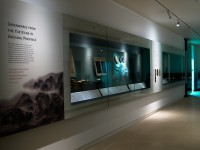
Carvings in jade and other hard stones are the finest objects that survive from Neolithic China. Most are ceremonial pieces made in the forms of metal knives. Jade was worked with abrasives and the process was slow and labour-intensive, making the items valuable. Later in the Shang and Zhou dynasties, many personal ornaments were carved in jade in imitation of the motifs on bronze vessels, and were sometimes assembled into many-tiered necklaces and girdles for burial.
In the Han dynasty, jade was considered to have protective properties. Jade coverings were placed in the hands and over the eyes and mouth of the deceased, and a few tombs have yielded entire suits of jade plaques sewn together.
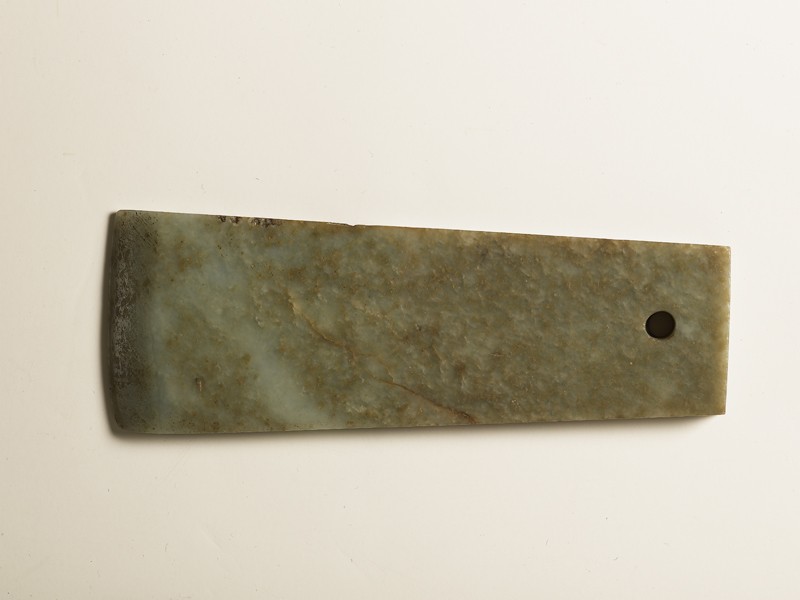 Ceremonial blade in imitation of a functional axe (EA1956.1614)
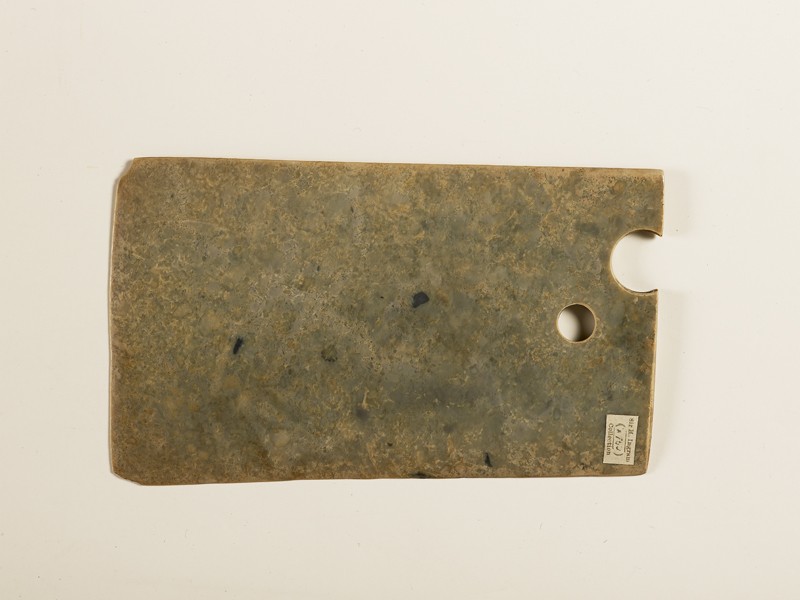 Ceremonial blade in imitation of a functioned axe (EA1956.1615)
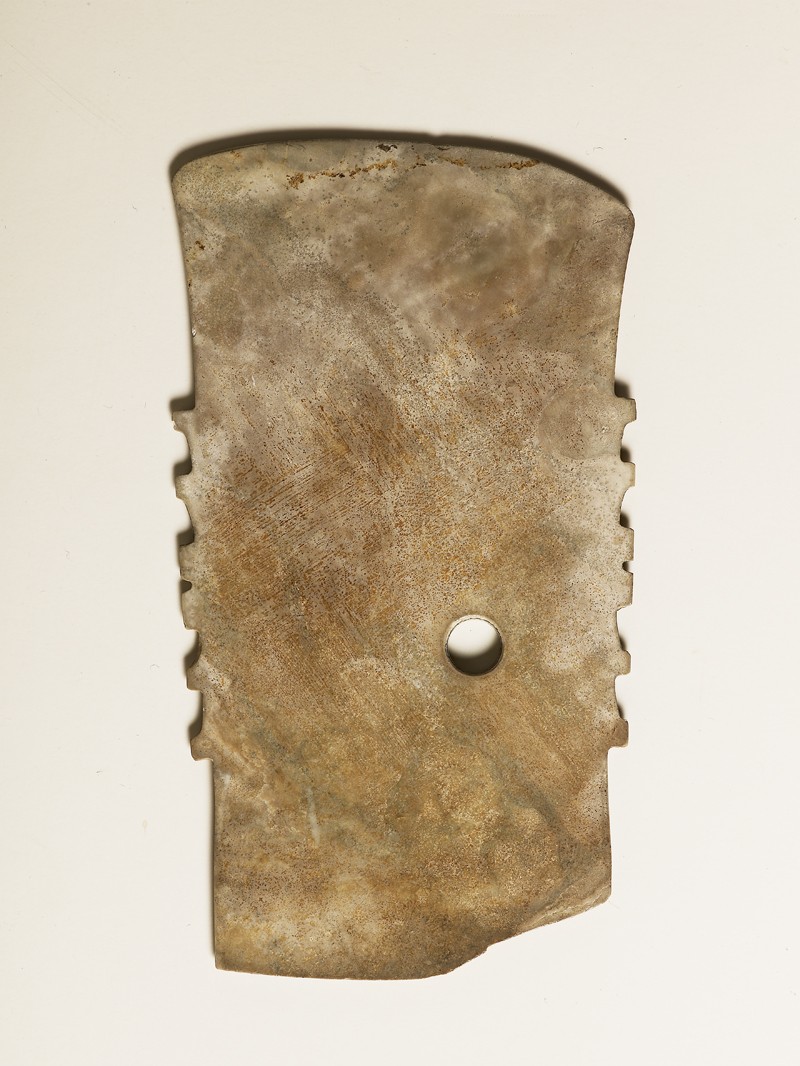 Notched ceremonial blade in imitation of a functioned axe (EA1956.1621)
 Ceremonial blade in imitation of a functioned axe (EA1956.1645)
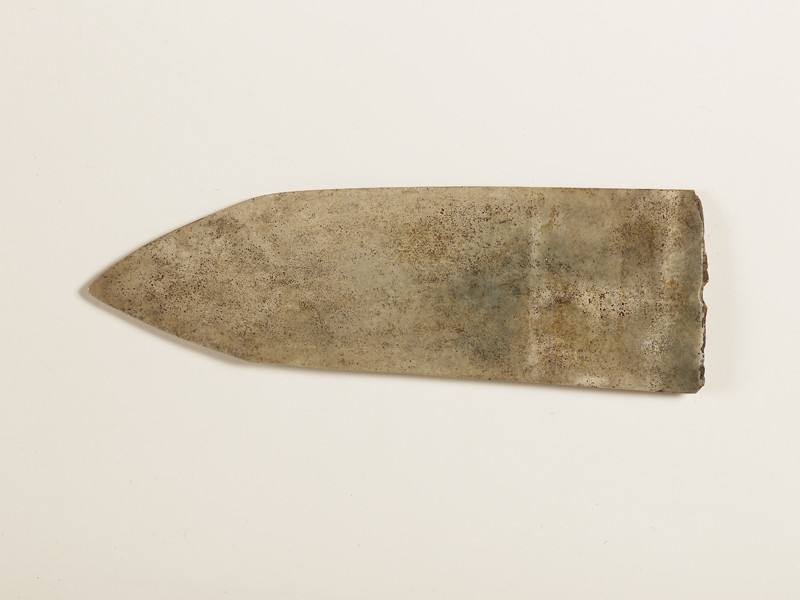 Ceremonial halberd (EA1956.1618)
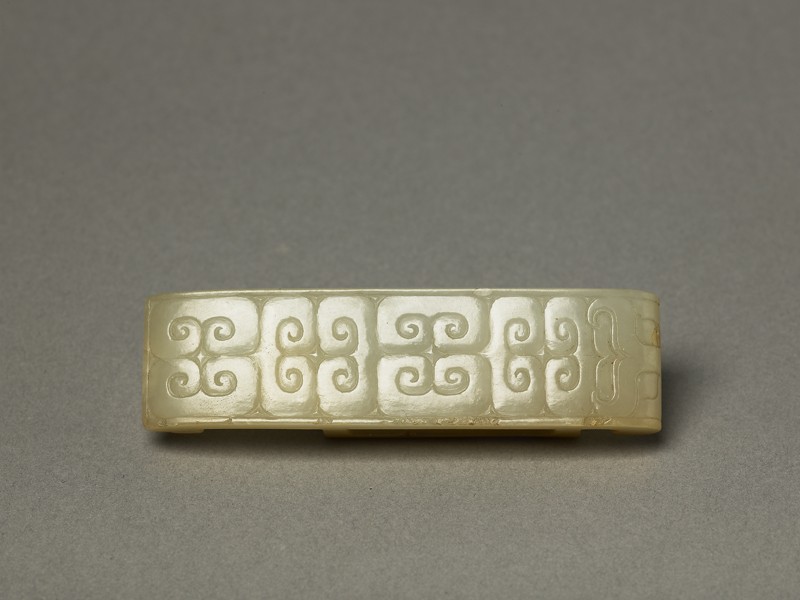 Ritual jade in the form of a sword slide (EA1956.1580)
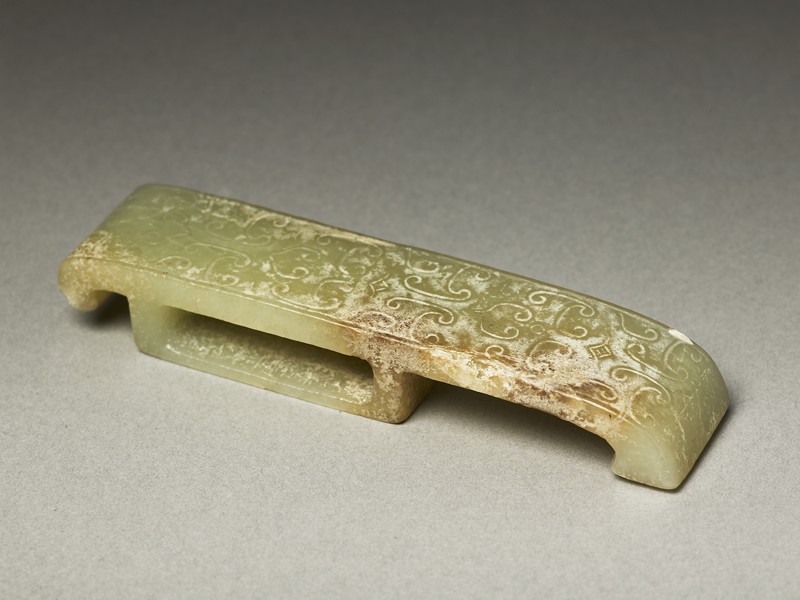 Ritual jade in the form of a sword slide (EA1956.1583)
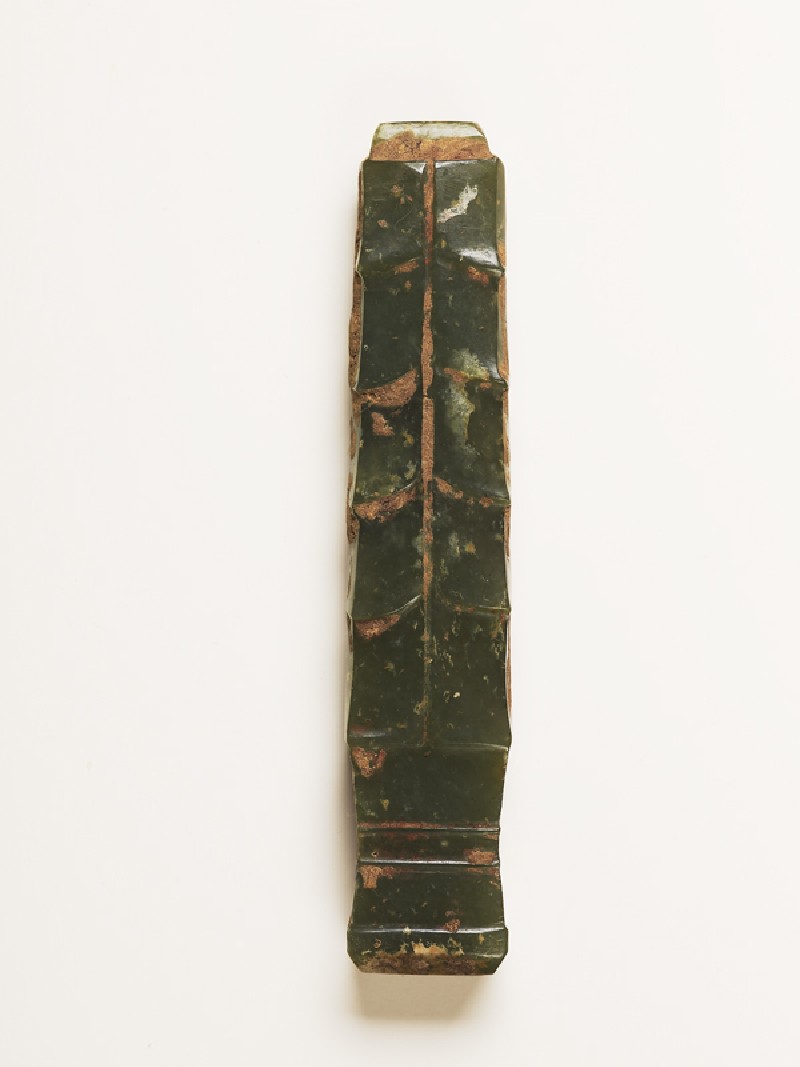 Handle-shaped jade (EA1956.1649)
 Ring, or bi, with spiral decoration (EA1956.1603)
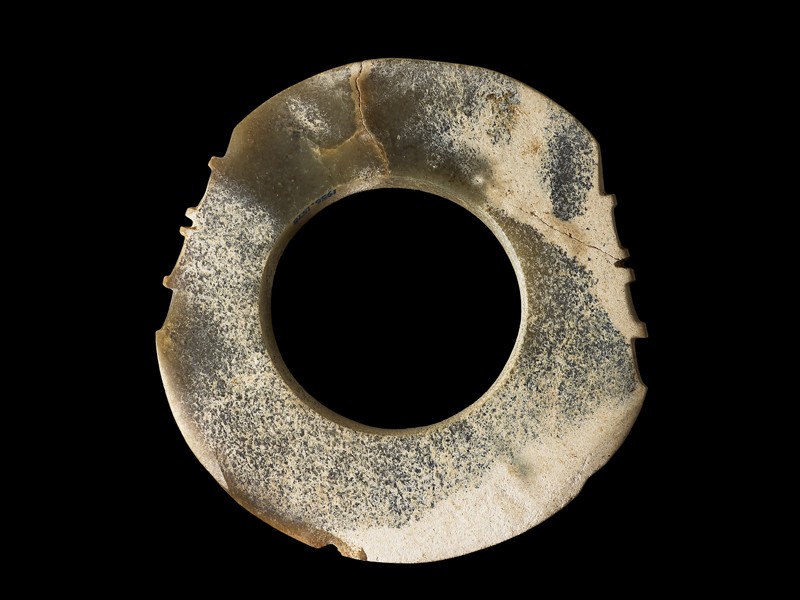 Notched disc axe, or xuanji (EA1956.1578)
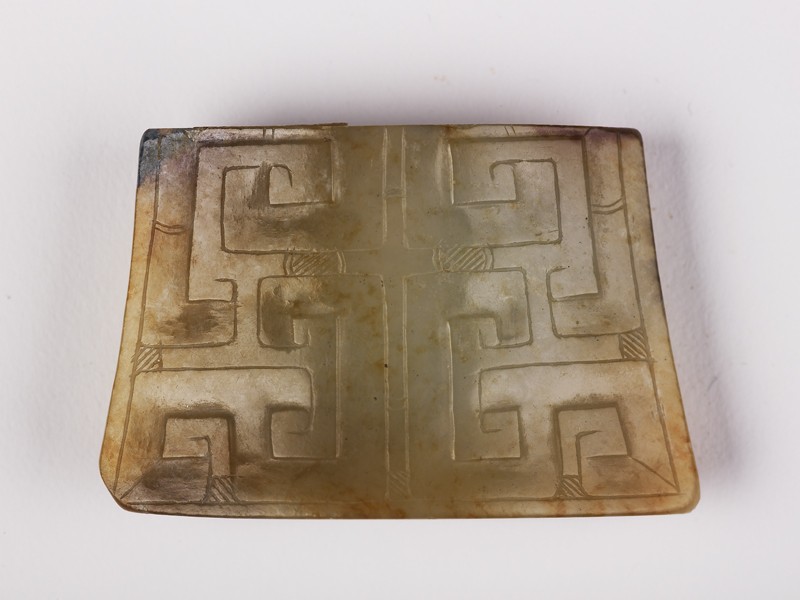 Scabbard chape (EA1956.1589)
 Pendant in the form of a fish (EA1956.1657)
 Jade ornament in the form of a horned animal (EA1956.1661)
 Pendant in the form of a fish (EA1956.1667)
 Pendant in the form of a fish (EA1956.1668)
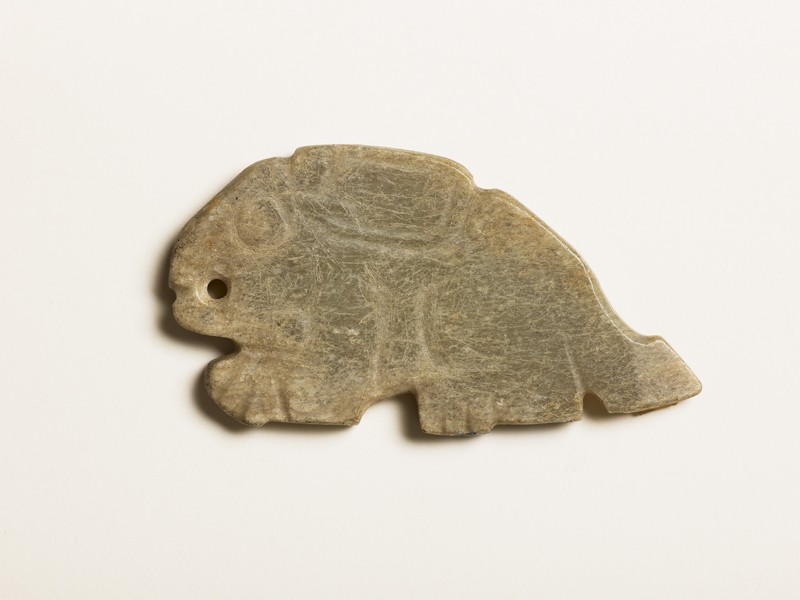 Pendant in the form of a hare (EA1956.1676)
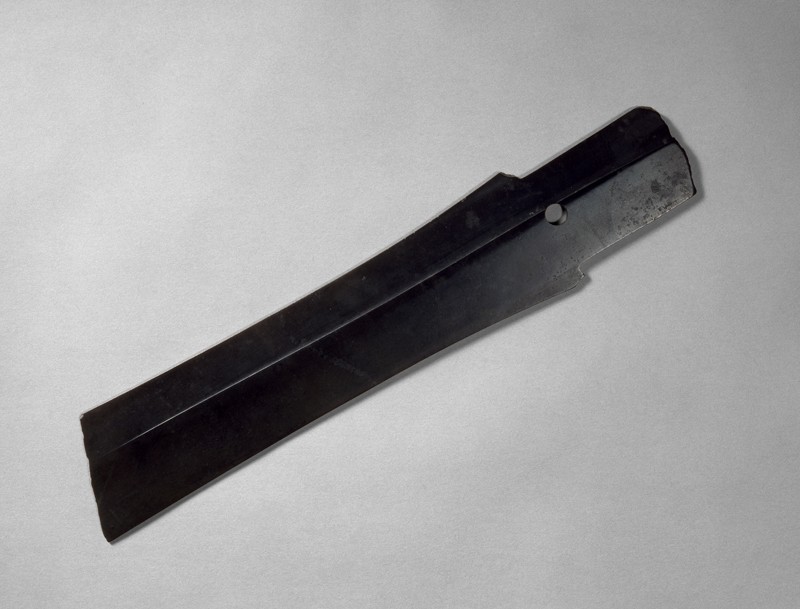 Ceremonial blade, or zhang (EA1956.1647)
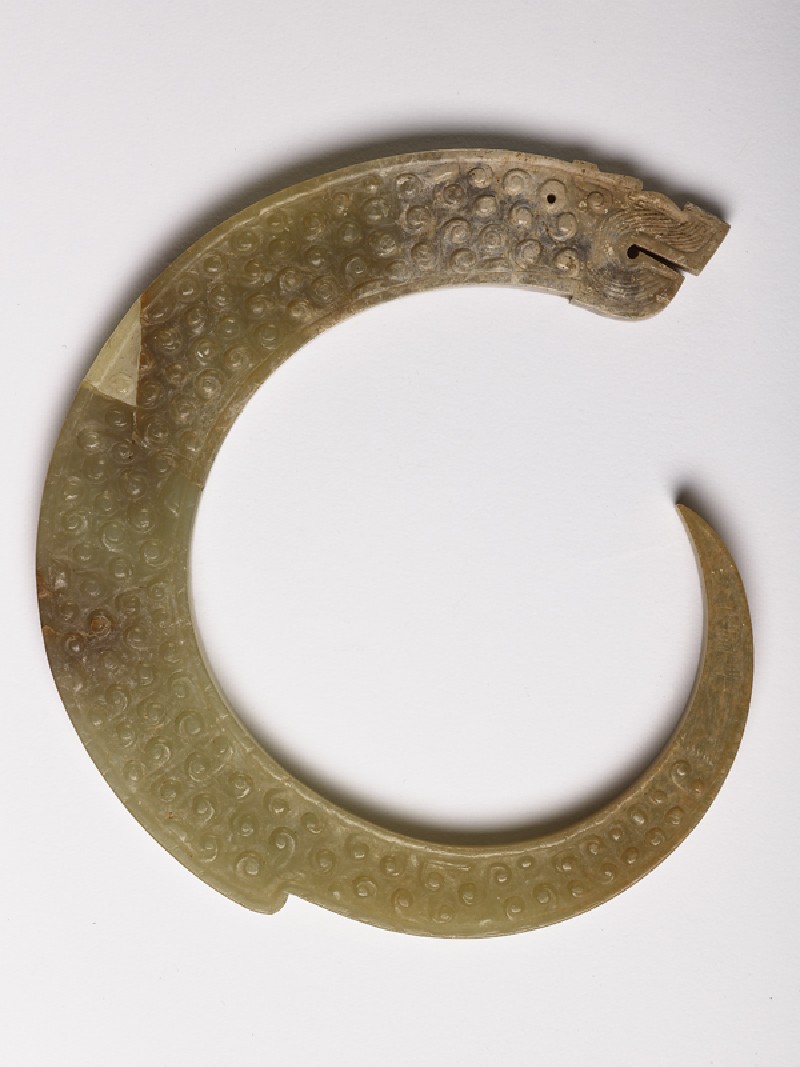 Pendant in the form of a curling dragon (EA1956.1592)
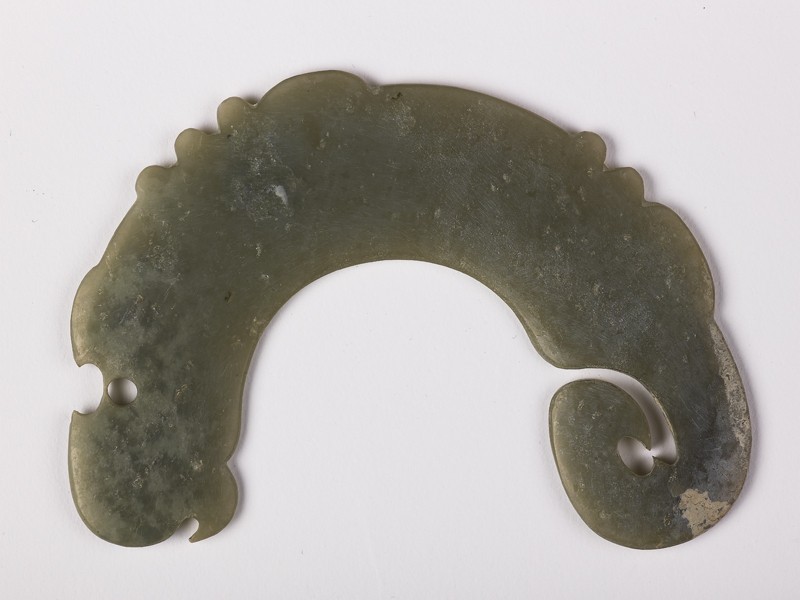 Notched pendant in the form of a dragon (EA1956.1591)
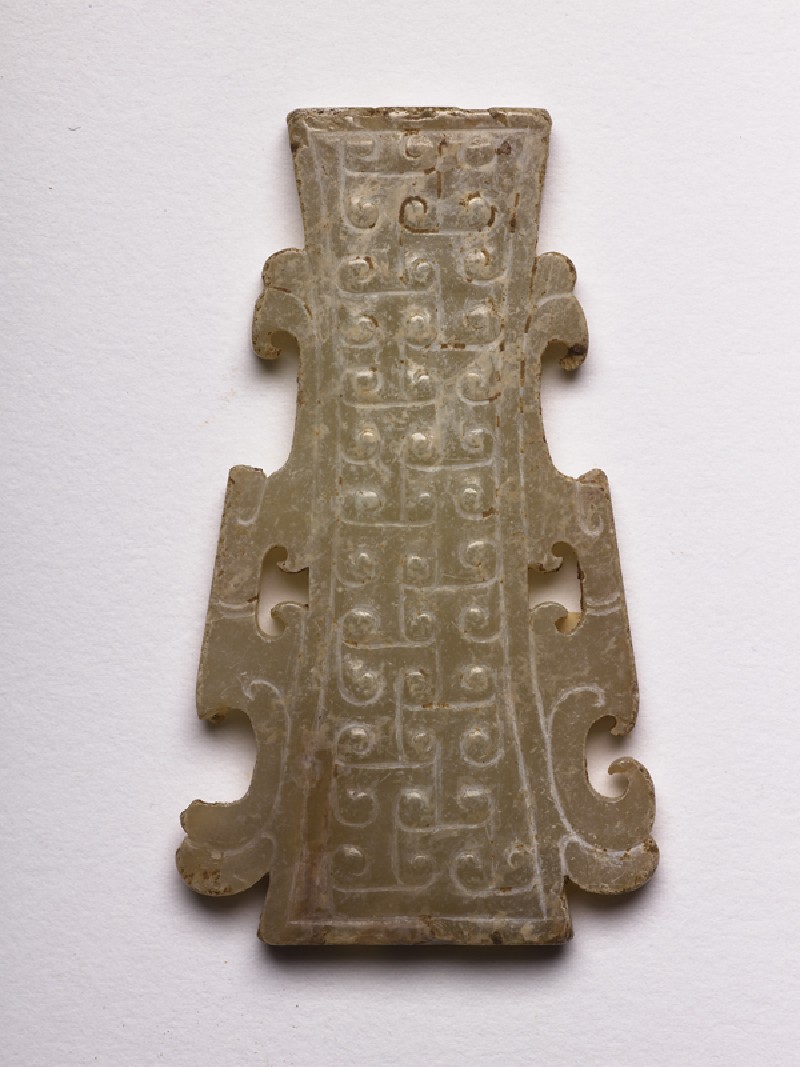 Pendant decorated with interlocking T-scrolls (EA1956.1596)
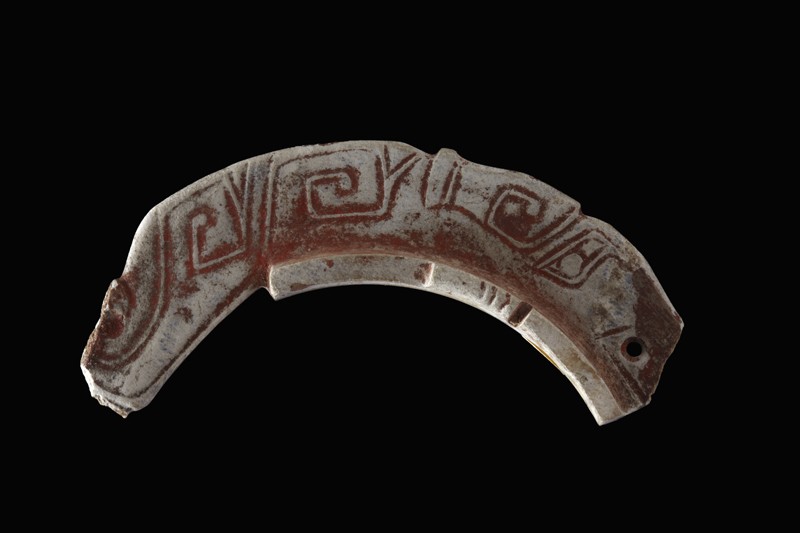 Pendant in the form of a crouching tiger (EA1956.1637)
 Pendant in the form of a crouching tiger (EA1956.1639)
Notice
Objects may have since been removed or replaced from a gallery. Click into an individual object record to confirm whether or not an object is currently on display. Our object location data is usually updated on a monthly basis, so contact the Jameel Study Centre if you are planning to visit the museum to see a particular Eastern Art object.
© 2013 University of Oxford - Ashmolean Museum