
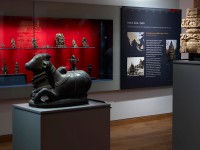
Room 32 | India 600-1900 gallery
Explore Hindu, Buddhist and Jain art from India, the Himalayas and Southeast Asia.
‘In the middle of the enclosure surrounding the bodhi tree is the diamond throne . . . It is the place where the Buddhas attain the holy path . . . When the great earth is shaken, this place alone is unmoved.'
(Bodhgaya described by the Chinese pilgrim Hsuan-tsang, AD 630-640)
Bodhgaya in Bihar, the site of the Buddha's Enlightenment, has always been a major pilgrimage place for Buddhist monks and laymen. The former prince Siddhartha Gautama, who had left his palace to become one of India's countless wandering holy men, arrived there around 531 BC.
Although he had practised many austerities in search of the true nature of existence, he had not yet come closer to this goal. At Gaya, seated in deepest meditation beneath a fig tree, he reached final Enlightenment or Buddhahood. Attaining perfect insight into the causes of universal suffering and rebirth, he conceived the way by which all beings may escape the bondage of ignorance and passion and attain Nirvana or peace.
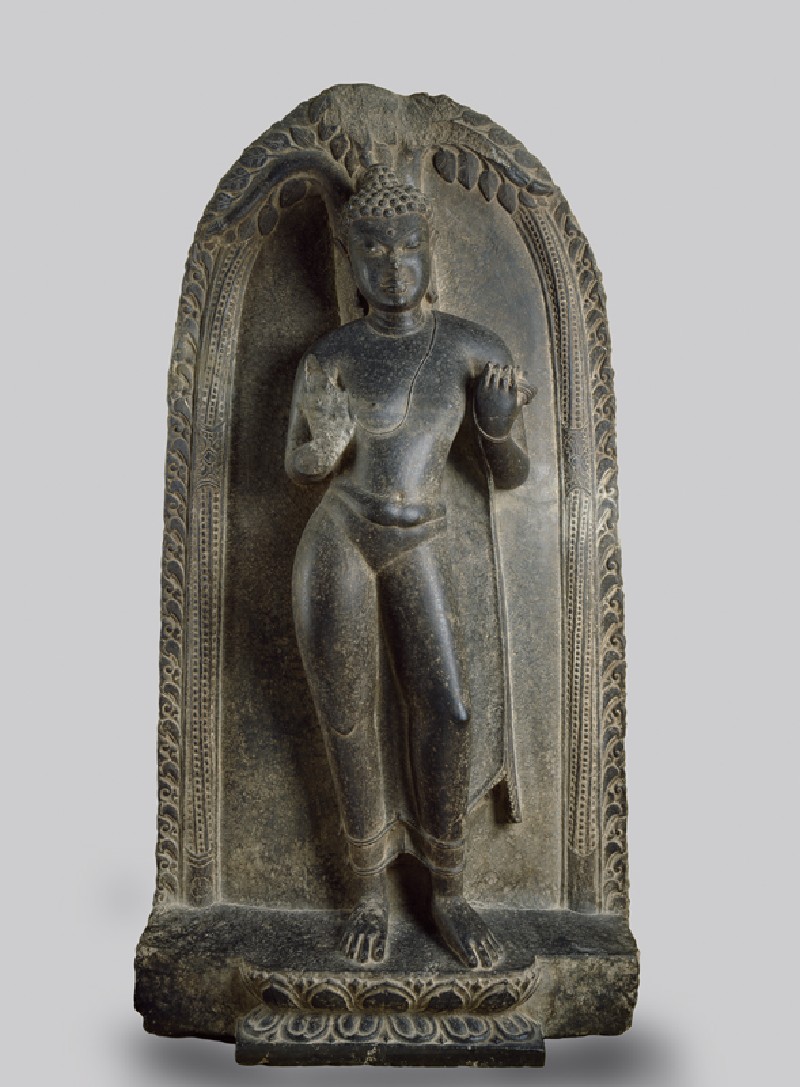 Statue of the Buddha beneath the Bodhi Tree (EAOS.56)
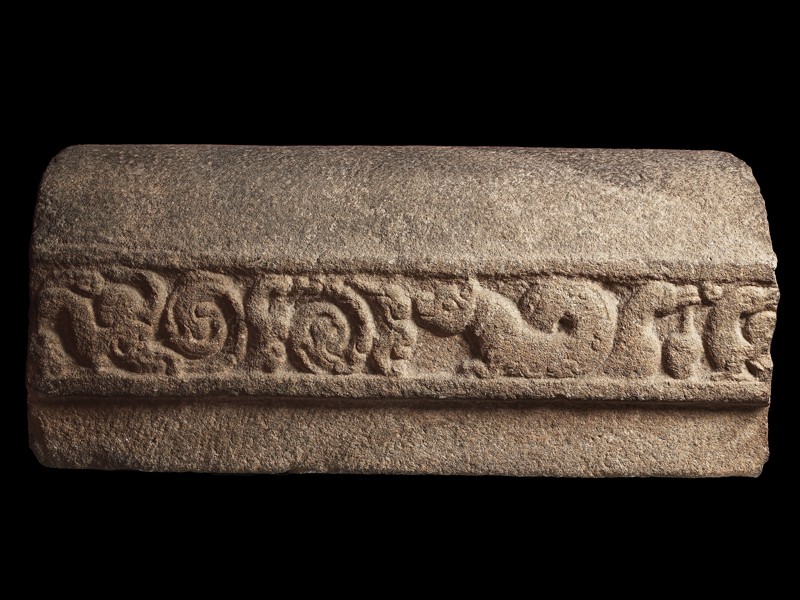 Stone coping piece (EAX.391)
Notice
Objects may have since been removed or replaced from a gallery. Click into an individual object record to confirm whether or not an object is currently on display. Our object location data is usually updated on a monthly basis, so contact the Jameel Study Centre if you are planning to visit the museum to see a particular Eastern Art object.
© 2013 University of Oxford - Ashmolean Museum